
Anterior Segment

Join us to read the latest news and abstract highlights from ASCRS 2026 The American Society of Cataract and Refractive Surgery Annual Meeting returned to Washington, D.C. from April 10–13, bringing together cataract, refractive, cornea and anterior segment specialists from around ...

At ASCRS 2026, artificial intelligence (AI) emerged not as a distant concept, but as a central theme shaping discussions across cataract and refractive care. This was underscored by the keynote presentation by Dr Kerry Soloman, Artificial Intelligence in Ophthalmology: Where We Are, Where We Should Go, and How to Get There Responsibly, which set the tone for a broader conversation around both the opportunities and responsibilities associated with AI adoption.




At ASCRS 2026, 36-month data from the first-in-human study of the OmniVu Lens System suggest that modular shape-changing intraocular lens (IOL) technology may deliver a durable solution for presbyopia correction following cataract surgery.

As we’ve come to expect, the ASCRS 2026 Annual Meeting delivered a strong mix of practical insights and emerging innovation across corneal and ocular surface disease. This year’s programme highlighted clear progress in regenerative therapies, improved recognition and management of ocular surface pain, and a rapidly evolving dry eye landscape driven by novel mechanisms and faster-acting treatments.

See who the ophthalmology community selected as the rising stars of 2026!

As we prepare for the launch of touchOPHTHALMOLOGY Future Leaders 2026, one theme has consistently emerged: future leaders do not develop in isolation. Behind every confident clinician, thoughtful academic and emerging opinion leader stands at least one mentor who has helped shaped their direction, discipline and mindset.

A recent study in Cell Reports reports that myopia may be associated not only with sensory retinal deficits but also with abnormal visuomotor responses during accommodation.

touchOPHTHALMOLOGY Future Leaders 2026 is nearly here! We are counting down to the launch of touchOPHTHALMOLOGY Future Leaders 2026 – a celebration of the rising stars shaping the future of ophthalmology.

As 2025 draws to a close, we’re celebrating another remarkable year of growth, collaboration and innovation at touchOPHTHALMOLOGY. From thought-provoking expert interviews and peer-reviewed research, to dynamic conference coverage and an expanding portfolio of medical education, this year has been ...
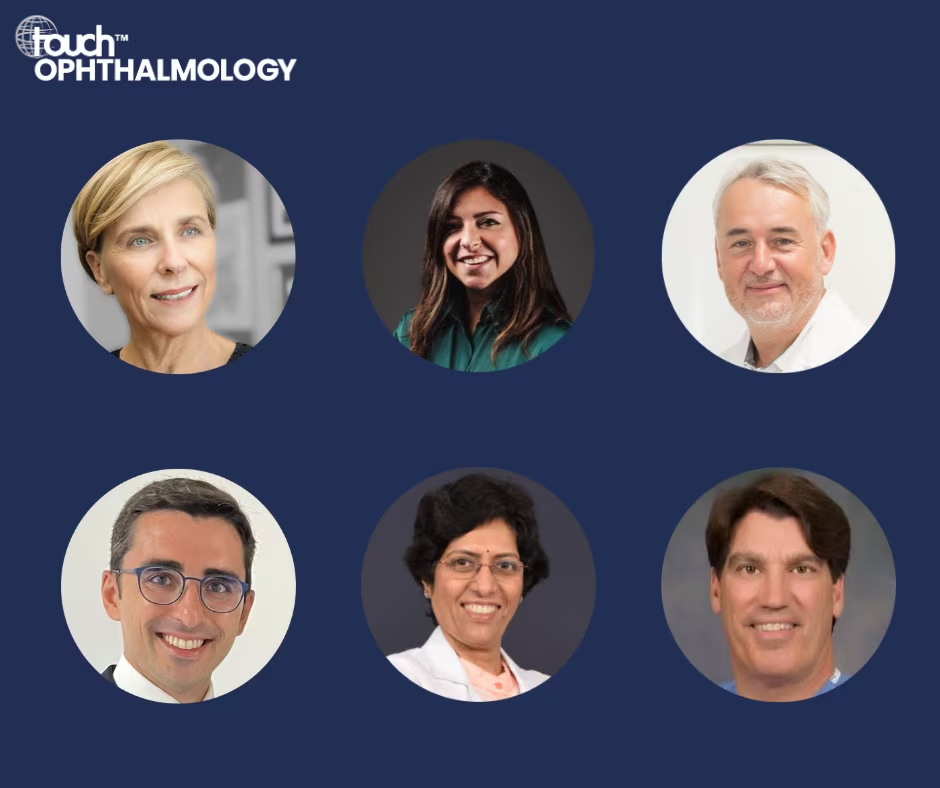
Specializing in ophthalmology is an exciting milestone – but it can also feel overwhelming. The transition from training to independent practice comes with big decisions, new responsibilities and the pressure to build a career that will stand the test of time. We asked members of our faculty and Future Leaders what guidance they would offer to colleagues just beginning their careers.
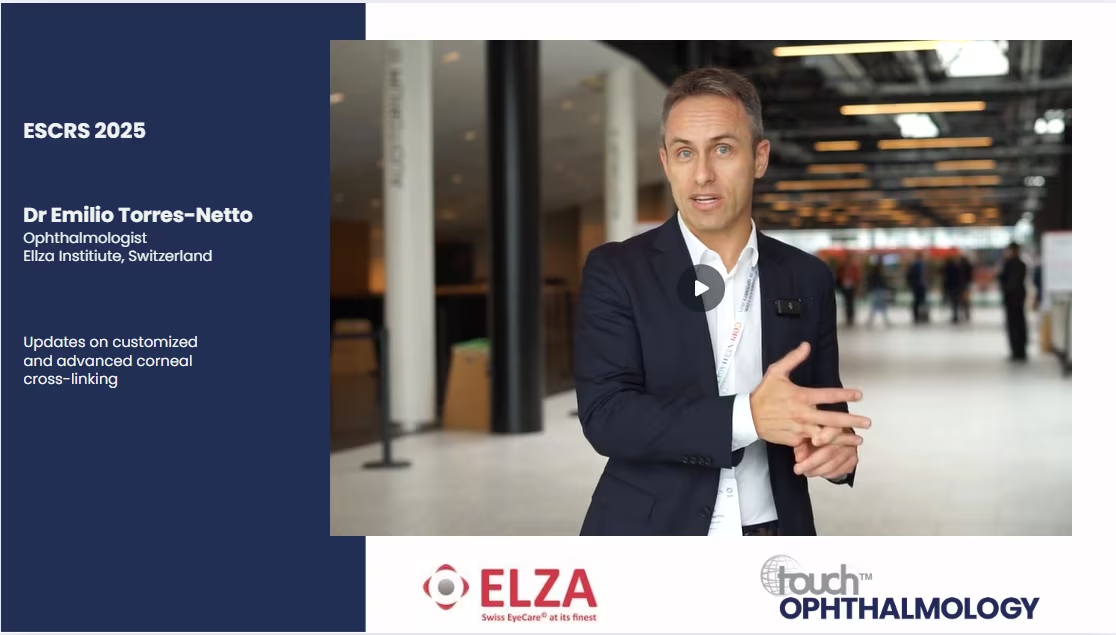
In this Q&A, Dr Emilio Torres-Neto discusses ELZA-PACE—the second-generation customised cross-linking technique designed to concentrate treatment precisely where the cornea is weakest—alongside the latest insights from the sub400 protocol for ultra-thin corneas and the role of ECO-CAIRS within a staged, individualised rehabilitation pathway.

The US FDA has approved a new topical therapy for keratoconus, marking the first corneal cross-linking treatment that does not require surgical removal of the corneal epithelium. The approval, announced by Glaukos Corporation, addresses a significant gap in treatment options for this progressive and often underdiagnosed rare disease.
In this Q&A, Prof. Alpins reflects on today’s clinical challenges, recent developments and the potential impact of artificial intelligence on the future of eye care.

In this episode of Visionary Voices, we welcome Associate Professor Grace Vincent from CQUniversity’s Appleton Institute. A leading expert on sleep and shift work, Grace explores how disrupted sleep affects physician health in both the short and long term, as well as its impact on safety and performance. We also discuss what this means for patient outcomes and share practical strategies to manage sleep loss.

With the second half of 2025 underway, we asked our touchOPHTHALMOLOGY Future Leaders 2025 to share the developments they believe will shape the future of the field. Here, they highlight four exciting areas that look set to change practice - not only as the year draws to a close, but well into the future.

Cloudbreak Pharma has announced positive topline results from its phase II trial of CBT‑004, a novel ophthalmic eye drop designed to treat vascularized pinguecula.

Physician burnout is at a critical point. In this episode, Nicky speaks with Dr Alfred Atanda about why so many physicians are burning out and what can be done to change the trend. From personal experience to system-wide solutions, Dr Atanda shares valuable insights on improving physician well-being and building a more effective healthcare culture.
Log into your Touch Account
Keep track of your clinical interests and newsletter subscriptions.
Sign up with an Email
Or use a .
Register now for FREE access
Already registered? Login below.
