Lessons from experience for early-career ophthalmologists
Specializing in ophthalmology is an exciting milestone – but it can also feel overwhelming. The transition from training to independent practice comes with big decisions, new responsibilities and the pressure to build a career that will stand the test of time. At times like these, the insights and hard-won wisdom of those further along the path become invaluable, offering guidance, reassurance and a clearer view of what lies ahead.
As we celebrated the touchOPHTHALMOLOGY Future Leaders 2025 earlier this year, we were reminded of the innovation, dedication and clinical curiosity shaping the next era of eye care. With nominations now open for the 2026 list, we asked members of our faculty and Future Leaders what guidance they would offer to colleagues just beginning their careers.
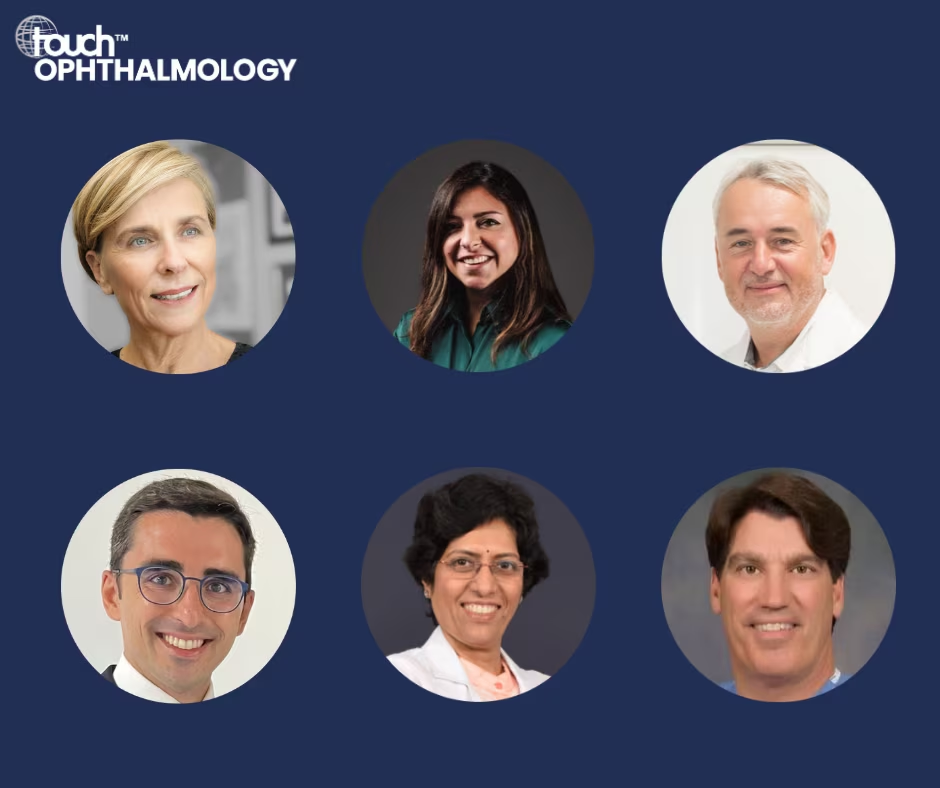
 Dr Karl Stonecipher captures the optimism many feel about the field today, reflecting that “it’s a great time to be an ophthalmologist”, with the specialty retaining a degree of autonomy that is becoming rare in medicine.
For those wondering how to position themselves for long-term success, Dr Alessandro Arrigo encourages cultivating a mindset of relentless curiosity and courage: be eager to learn, brave enough to explore new directions, inventive in your approach and skilled at refining the tools already available.
Innovation also features prominently in the advice of Prof Anat Loewenstein, who stresses the value of embracing emerging technologies early. Staying open to new tools, platforms and techniques not only enhances patient care but also keeps clinicians at the forefront of a rapidly evolving specialty.
Looking ahead is a theme echoed by Prof Andrzej Grzybowski, who suggests seeking out voices who “try to read the future” – those who can help you anticipate trends, recognise opportunities and prepare for shifts in practice before they arrive.
Dr Dhanashree Ratra offers a reminder that technical excellence and human insight must develop side by side. Early-career ophthalmologists should focus on mastering surgical skills, interpreting imaging thoughtfully and, above all, remembering that patients rarely fit neatly into clinical trial criteria. Guidelines are a compass, she notes, but good judgment comes from treating the whole person.
Finally, Dr Maria Vittoria Cicinelli highlights the surprising pathways that often shape an ophthalmology career. With rapid advances in imaging, genetics and AI, she encourages clinicians to stay curious, stay open and remain willing to step beyond traditional routes.
Across all these perspectives, one message is clear: curiosity, adaptability and a willingness to embrace change will be the qualities that not only support early-career ophthalmologists but also empower them to lead. As new technologies, techniques and models of care continue to impact the field, those who remain open-minded and forward-thinking will be best placed to drive meaningful progress and redefine what is possible in eye care for the generations to come.
 Why not get involved in touchOPHTHALMOLOGY Future Leaders 2026 and recognise a colleague or peer already making an impact in the field. The nomination form along with full eligibility criteria is available here.Look back at the touchOPHTHALMOLOGY Future Leaders 2025 to see who made our list.
Interested in reading more expert perspectives from the touchOPHTHALMOLOGY faculty? Here are some of our latest ‘Voices in vision‘ perspectives, sharing further insights about current practice challenges and the role of AI:
- Voices in Vision: Dr Dhanashree Ratra on how AI is transforming vitreoretinal care
- 5 Expert perspectives on AI in ophthalmology
- Voices in vision: Prof. Noel Alpins on improving patient satisfaction in refractive laser surgery
Register now to receive the touchOPHTHALMOLOGY newsletter!
Don’t miss out on hearing about our latest peer reviewed articles, expert opinions, conference news, podcasts and more.