Retinoblastoma is the most common primary intraocular malignancy in childhood, and early diagnosis remains critical for preserving vision, the eye itself and, in some cases, life. However, timely detection can be challenging, particularly in regions where access to specialist ocular oncology expertise is limited, highlighting an important opportunity for emerging diagnostic technologies.
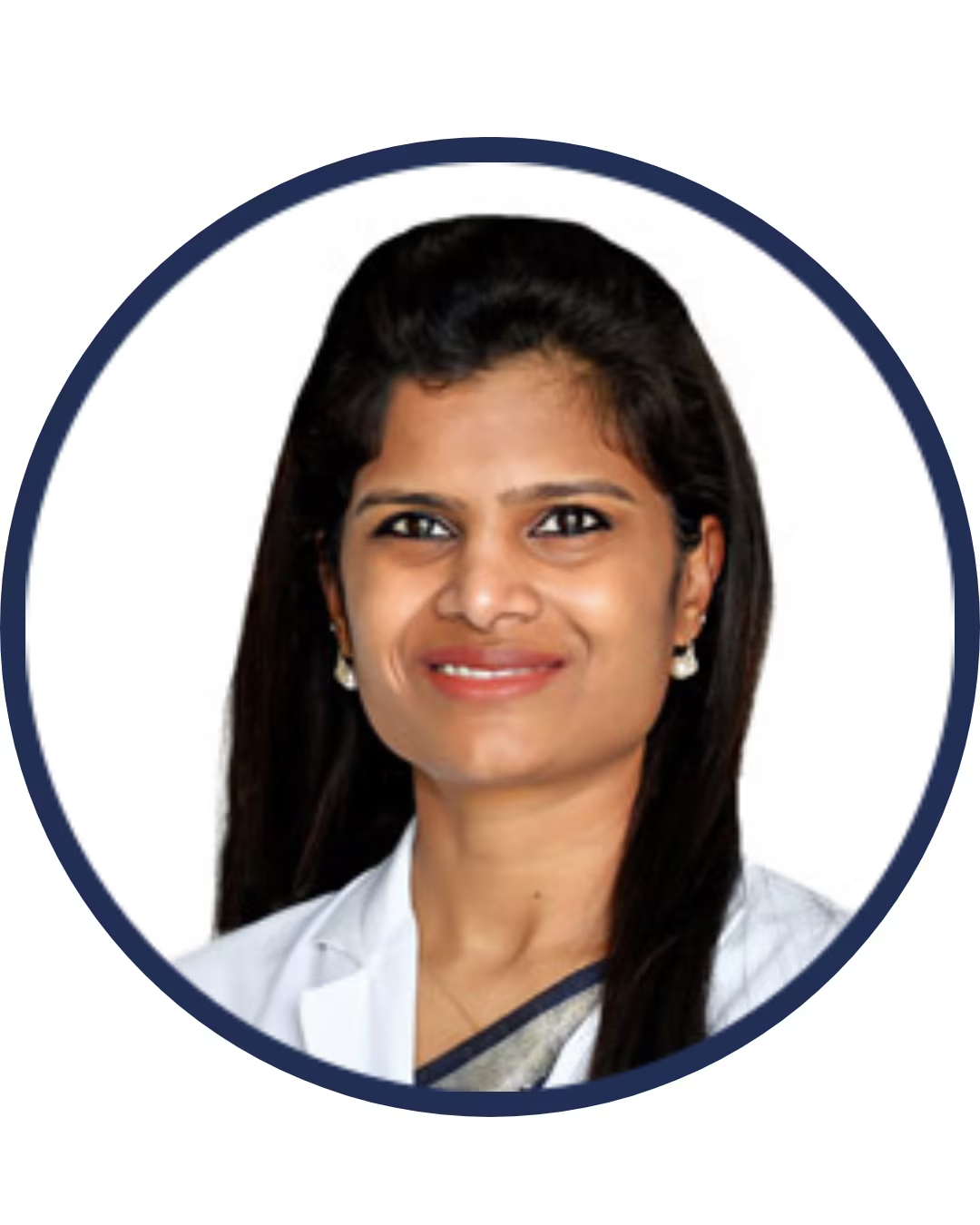
 Artificial intelligence was a major theme throughout the ARVO 2026 Annual Meeting, with growing interest in how AI-driven tools could support earlier diagnosis, improve clinical decision-making and expand access to specialist care. In the session AI Developments in Ocular Oncology and Ophthalmic Pathology, Dr Swathi Kaliki (OEU Institute for Eye Cancer, LV Prasad Eye Institute) explored the evolving role of artificial intelligence and machine learning in retinoblastoma screening and classification.
Presenting data from a multiracial cohort, Dr Kaliki developed and validated an AI model designed to detect and classify retinoblastoma using fundus images alone. The model demonstrated an overall accuracy of 97% for retinoblastoma detection and classification accuracies of 98%, 93%, >99%, 94% and 93% across International Classification of Retinoblastoma Groups A–E, demonstrating the feasibility of training AI systems to support image-based tumour assessment across diverse patient populations.
Following the session, we spoke with Dr Kaliki about how effectively the model could distinguish between different retinoblastoma stages using fundus imaging alone, the challenges of maintaining AI accuracy across patients with different retinal pigmentation backgrounds, and why retraining the model using a more diverse dataset was critical to achieving strong performance in a multiracial cohort. We also asked what these findings could mean for clinicians seeking practical screening tools in settings where specialist expertise may be limited.
How effectively can the AI model distinguish between different International Classification of Retinoblastoma groups using only fundus images?
What were the specific outcomes regarding the accuracy of this machine learning tool when applied to a multiracial cohort?
What is the most significant takeaway for clinicians regarding the integration of AI as a screening tool for early retinoblastoma detection?
Key takeaway
AI-based screening for retinoblastoma is moving closer to real-world clinical application. When trained on diverse patient populations, these tools could help support earlier diagnosis, expand access to specialist-level screening and ultimately improve outcomes by saving vision, eyes and lives.
Disclosures: Dr Swathi Kaliki has nothing to disclose in relation to this article. No fees or funding were associated with this article.
Cite: Swathi Kaliki. ARVO 2026: AI model demonstrates high accuracy in retinoblastoma detection. touchOPHTHALMOLOGY. 8 May 2026.
Editor: Nicola Cartridge, Head of Content
Acknowledgments: This content has been developed independently by Touch Medical Media for touchOPHTHALMOLOGY. It is not affiliated with ARVO. Views expressed are the speaker’s own and do not necessarily reflect the views of Touch Medical Media.