Top five stories we have been keeping an eye on

This week in ophthalmology: robotic-assisted vitreoretinal surgery, a completed NDA submission for tinlarebant in Stargardt disease type 1, changing treatment patterns in retinopathy of prematurity, FDA acceptance of the resubmitted BLA for ONS-5010/LYTENAVA™ in wet AMD, and where AI may add value beyond image analysis. Here are five stories to catch up on this week.
Don’t miss out on hearing about our latest peer-reviewed articles, expert opinions, conference news, podcasts and more.
1. Robotic-assisted vitreoretinal surgery moves toward future retinal care
Our recent Q&A explores the developing role of robotic assistance in vitreoretinal surgery, where procedures often require micron-level precision and high levels of manual stability.
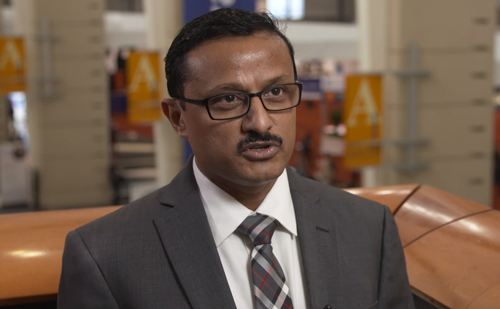
Dr Hashem Abu Serhan discusses where robotics is already showing clinical promise, including membrane peeling and retinal vascular cannulation, as well as areas that remain experimental, such as autonomous maneuvers, AI-guided procedures and advanced telesurgery.
For retina specialists, the clinical relevance is not surgeon replacement, but surgical augmentation. As retinal therapies become more sophisticated, robotic platforms may help support greater precision, reproducibility and safety in highly delicate procedures.
2. Belite Bio completes rolling NDA submission for tinlarebant in Stargardt disease type 1
Belite Bio has completed the rolling submission of a New Drug Application to the US Food and Drug Administration for tinlarebant, an investigational once-daily oral therapy for Stargardt disease type 1.
Stargardt disease type 1 is a rare inherited retinal disease caused by ABCA4 mutations and associated with progressive, irreversible vision loss. Tinlarebant is intended to reduce the accumulation of vitamin A-based toxins, known as bisretinoids, that contribute to retinal disease.
The NDA was submitted under Breakthrough Therapy Designation. If accepted, the FDA will assign a Prescription Drug User Fee Act target action date, marking an important regulatory step for a disease with no currently approved treatment options.
3. ARVO 2026 data show anti-VEGF therapy reshaping ROP treatment
A touchOPHTHALMOLOGY conference report from ARVO 2026 highlights a decade-long shift in retinopathy of prematurity treatment, with intravitreal anti-VEGF therapy increasingly used alongside or instead of laser photocoagulation.
Using IRIS® Registry data from 2014 to 2024, the analysis found that laser remained the most common treatment overall, but its use declined over time. By 2024, laser monotherapy had fallen to around half of treated infants, while injection-based approaches had become increasingly common.
The findings underline a changing treatment landscape in ROP. Anti-VEGF therapy offers practical advantages in medically fragile premature infants, but laser remains an essential skill, particularly where long-term follow-up is uncertain or disease characteristics favor laser-based treatment.
4. FDA accepts resubmitted BLA for ONS-5010/LYTENAVA™ in wet AMD
Outlook Therapeutics has announced that the FDA has accepted the resubmitted Biologics License Application for ONS-5010/LYTENAVA™ (bevacizumab-vikg) for neovascular age-related macular degeneration, also known as wet AMD.
The resubmission has been classified as a Class 1 review, with a PDUFA target action date of July 29, 2026. ONS-5010 is an ophthalmic formulation of bevacizumab developed specifically for intravitreal use.
For retina specialists, the potential significance lies in the possibility of an FDA-approved ophthalmic formulation of bevacizumab for wet AMD, supported by standardized manufacturing, approved labeling and pharmacovigilance.
5. AI in ophthalmology may add value beyond image analysis
A new touchOPHTHALMOLOGY article explores where artificial intelligence could support ophthalmology beyond image interpretation alone.
Dr Germán Mejía-Salgado discusses the potential for AI to help integrate complex clinical information, support risk stratification, personalize follow-up care and improve patient education. These applications may be particularly relevant in chronic ophthalmic diseases where long-term monitoring and adherence are central to outcomes.
The key message is practical: AI tools will need to demonstrate real clinical utility, integrate smoothly into workflows and remain transparent enough to support clinician trust. The strongest applications are likely to augment, rather than replace, clinical judgment.
Cite: This week in ophthalmology | June 19, 2026. touchOPHTHALMOLOGY. 19 June 2026.
Acknowledgment: This content was created by the touchOPHTHALMOLOGY team utilizing AI as an editorial tool. The content was developed and edited by human editors. No funding was received in the publication of this article.
Editor: Nicola Cartridge, Director of Content