What Artemis II is revealing about human physiology in deep space

The Artemis II mission successfully returned to Earth on April 10, 2026. While the crew begins the physical process of readjusting to Earth’s gravity, the ophthalmic community is just starting its deep dive into the most significant ocular data set in over half a century.
This mission represents more than a milestone in exploration; it serves as a high-stress incubator for the human visual system. By removing the constant of Earth’s gravity and exposing human tissue to the deep-space environment, NASA is helping us solve complex physiological mysteries that have direct implications for our patients on the ground. From neuro-ophthalmic pressure gradients to the resilience of the corneal surface, this research is reshaping our clinical understanding of the eye.
Register now to stay up to date and be the first to receive our latest news, expert perspectives and insights.
A microgravity model of optic nerve pressure dynamics
Exposure to microgravity induces a cephalad fluid shift that alters the balance between intraocular and intracranial pressures, providing a unique human model to study optic nerve biomechanics. These changes are captured within Spaceflight-Associated Neuro-ocular Syndrome (SANS), a constellation of findings including optic disc oedema, globe flattening and refractive shifts observed in astronauts following spaceflight.1
From a neuro-ophthalmic perspective, this environment offers insight into the translaminar pressure gradient (TLPG) – the relationship between intraocular pressure (IOP) and cerebrospinal fluid pressure across the lamina cribrosa. Disruption of this balance has been implicated in optic nerve remodelling in both glaucoma and intracranial pressure disorders.2
Key insight: Spaceflight does not redefine glaucoma, but it reinforces the concept that the relative balance between IOP and retrolaminar pressure may be as important as IOP alone in determining optic nerve health.3
Clinical perspective: Observations from microgravity, including optic nerve sheath distension and altered cerebrospinal fluid dynamics, are helping to inform mechanistic models relevant to conditions such as normal tension glaucoma and idiopathic intracranial hypertension, where pressure gradients rather than absolute pressures may drive disease.
Expert perspective
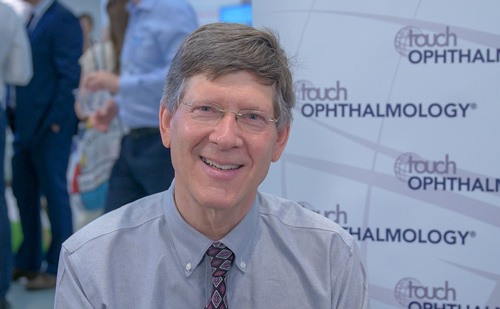
Dr Andrew G Lee, Chair of Ophthalmology at Houston Methodist and NASA consulting physician specialising in SANS, discusses how Artemis II could redefine our understanding of human physiology in extreme environments, and what that means for personalised care on Earth.
Biological drivers of individual susceptibility
One of the key insights emerging from spaceflight research is that SANS does not affect all astronauts equally. While the phenotype is consistent, its severity varies, suggesting underlying biological susceptibility.4
Recent work has focused on systemic and metabolic contributors, including one-carbon metabolism and B-vitamin–related pathways, as potential modifiers of risk. These findings point toward a model in which vascular regulation, cerebrospinal fluid dynamics and tissue resilience interact to determine how the optic nerve responds to altered pressure environments.
Key insight: SANS highlights that optic nerve vulnerability is not uniform; it is shaped by systemic and possibly genetic factors that influence how pressure changes are tolerated.
Clinical perspective: While not yet ready for routine clinical use, this line of research supports a broader shift toward risk stratification in optic neuropathies, where individual susceptibility, rather than pressure alone, may help explain why some patients develop disease at “normal” pressures while others do not.
Ocular surface protection in extreme environments
The lunar surface presents a unique challenge for ocular protection. Fine, electrostatically charged regolith particles are highly abrasive and have been shown to adhere to surfaces, raising concerns around mechanical irritation and contamination of the ocular surface during extravehicular activity.5,6
Clinical insight: Efforts to protect the eye in extreme environments have driven advances in barrier technologies, including visor design, particulate shielding and surface protection strategies aimed at preserving tear film stability and epithelial integrity under stress.
Clinical perspective: While developed for spaceflight, these approaches may inform future strategies for managing severe ocular surface disease, including dry eye and exposure keratopathy, where maintaining surface integrity remains a central challenge.
AI and autonomous diagnostics in remote care
The constraints of spaceflight have accelerated interest in autonomous diagnostic systems, where imaging and analysis must occur without immediate access to specialist input. In this setting, artificial intelligence has been explored as a means of supporting real-time interpretation of ocular imaging data.7
Clinical insight:
AI-supported image analysis has demonstrated the potential to detect and monitor retinal disease with accuracy approaching that of human graders in conditions such as diabetic retinopathy and age-related macular degeneration.
Clinical perspective:
These advances align with the continued expansion of tele-ophthalmology, where automated interpretation may support earlier detection and more consistent monitoring of chronic retinal disease, particularly in settings with limited specialist access.
Key takeaway
Data from Artemis II are advancing understanding of how microgravity and radiation affect human physiology, linking spaceflight research to future strategies in cardiovascular and neuro-ocular disease.
References:
- Ong J, Tarver W, Brunstetter, et al. Spaceflight associated neuro-ocular syndrome: proposed pathogenesis, terrestrial analogues, and emerging countermeasures. Br J Ophthalmol. 2023;107:895–900. doi: 10.1136/bjo-2022-322892
- Berdahl JP, Yu DY, Morgan WH. The translaminar pressure gradient in sustained zero gravity, idiopathic intracranial hypertension, and glaucoma. Medical Hypotheses. 2012;79:719-24. doi: 10.1016/j.mehy.2012.08.009
- Yang JW, Song QY, Zhang MX, et al. Spaceflight-associated neuro-ocular syndrome: a review of potential pathogenesis and intervention. Int J Ophthalmol. 2022;15:336–41. doi: 10.18240/ijo.2022.02.21
- Brunstetter TJ, Zwart SR, Brandt K. Severe Spaceflight-Associated Neuro-Ocular Syndrome in an Astronaut With 2 Predisposing Factors. JAMA Ophthalmol. 2024;142:808-817. doi:10.1001/jamaophthalmol.2024.2385
- NASA/SP-2010-3407, Human Integration Design Handbook. NASA. Available at: www.nasa.gov/human-integration-design-handbook (accessed 28 April 2026).
- Childress SD, Williams TC, Francisco DR. NASA Space Flight Human-System Standard: enabling human spaceflight missions by supporting astronaut health, safety, and performance. npj Microgravity.2023;9:31. doi: 10.1038/s41526-023-00275-2
- Ong J, Tavakkoli A, Zaman N, et al. Terrestrial health applications of visual assessment technology and machine learning in spaceflight associated neuro-ocular syndrome. npj Microgravity. 2022;8:37. doi:10.1038/s41526-022-00222-7
Cite: How will Artemis II insights into the eye in space translate to care on Earth? touchOPHTHALMOLOGY. 28 April 2026.
Editor: Nicola Cartridge, Head of Content
Acknowledgment: Thank you to Dr Andrew Lee for providing his expert insights. This article was created by the touchOPHTHALMOLOGY team utilizing AI as an editorial tool (ChatGPT (GPT-5.4) [Large language model]. https://chat.openai.com/chat.) The content was developed and edited by human editors. No funding was received in the publication of this article.