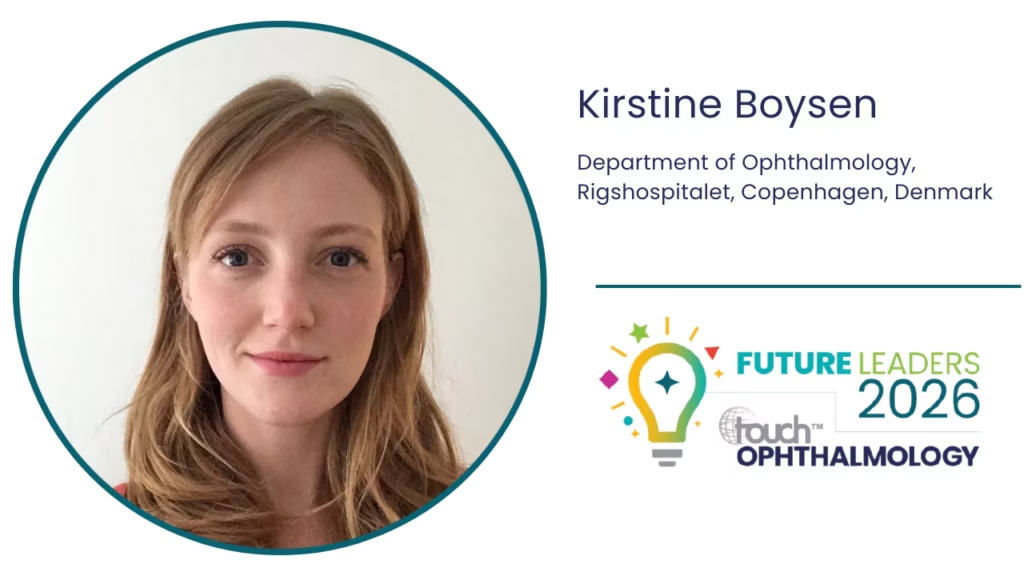
We are delighted to announce Dr Kirstine Boysen as a touchOPHTHALMOLOGY Future Leader 2026, selected by peers as one of the ophthalmologists changing the future of eye care.
After completing her first year of residency at the Department of Ophthalmology at Rigshospitalet, Denmark, Dr Boysen is currently pursuing her PhD thesis focused on rare genetic eye diseases. In 2025, she was appointed SOE YO Chair, a role that allows her to actively champion equal access to education and professional development opportunities for young ophthalmologists across Europe.
In this Future Leaders interview, Dr Boysen shares the inspirations behind her career so far, the early mentor who helped to shape her approach to patient care, and what excited her most about the future.
Q: What inspired you to pursue a career in ophthalmology?
The ophthalmology course during medical school opened my eyes for the specialty. The consultant ophthalmologist teaching our class embodied the kind of physician I aspired to become. She emphasized the importance of deep, thorough knowledge combined with empathetic yet clear communication with patients. I did some of my first research work under her supervision and quickly realized how multifaceted ophthalmology is.
Shortly after the course, I had the opportunity to spend ten weeks rotating through different subspecialty teams at the Department of Ophthalmology at Copenhagen University Hospital – Rigshospitalet. That experience confirmed my decision. I was captivated by the diversity of patients and conditions we encounter; from young to old, from fairly simple to very complex. We treat and diagnose everything from systemic disease to diseases in the tiniest structures of our body. I value the close collaboration with optometrists, nurses, orthoptists, and vision rehabilitation specialists, while also appreciating the autonomy of being able to diagnose and treat many patients independently and make an immediate difference. Not to mention the fascinating intersection of advanced imaging technology and clinical medicine.
Ophthalmologists take care of something that often is taken for granted until it is gone, and sometimes we even have the responsibility to safe lives.
Q: Who has been the most significant mentor or role model for you, and what did you learn from them?
My most significant role model in my professional life is Professor Line Kessel, the first teacher I had in Ophthalmology and my current PhD supervisor. Foremost, I am inspired by the way she cares for her patients as a pediatric ophthalmologist. She holds her patients and their parents dear and treats them with genuine compassion and great professionalism. She is always thoroughly prepared and has a remarkable ability to recognize and address their concerns. As a teacher and mentor, she is clear about her expectations, yet always with fairness and empathy, which is what helped me gain confidence and grow professionally.
On a personal level, my mother has also been an important role model. As a woman with a great career who is also a staunch feminist, she never doubted that professional ambition and family life belong together. She instilled that conviction in her children, shaping my understanding of what is both possible and worth striving for.

“Ophthalmologists take care of something that often is taken for granted until it is gone, and sometimes we even have the responsibility to safe lives.“
Q: What current innovations in ophthalmology excite you the most?
Working with rare genetic diseases in my PhD, I have become particularly excited about the rapid advancements in gene therapy and genetic diagnostics. The success of Luxturna for RPE65-associated Leber congenital amaurosis marked a historic milestone, and with more than 300 ongoing clinical trials on inherited eye diseases, the field feels poised for further breakthroughs. Doing my PhD thesis on Stickler syndrome I have witnessed a significant rise in ongoing research and awareness on this topic. Advancements in prophylactic treatment options for retinal detachments, the fast-evolving field of genetic diagnostics, and the understanding of the underlying pathology, are all ongoing successes of great value to people with Stickler syndrome.
Disclosures: This short article was prepared by touchOPHTHALMOLOGY in collaboration with Dr Boysen. No fees or funding were associated with its publication.
Citation: Dr Kirstine Boysen on the future of genetic innovation: touchOPHTHALMOLOGY Future Leaders 2026. touchOPHTHALMOLOGY. 11 March 2026.
Register now to receive the touchOPHTHALMOLOGY newsletter!
Don’t miss out on hearing about our latest peer reviewed articles, expert opinions, conference news, podcasts and more.