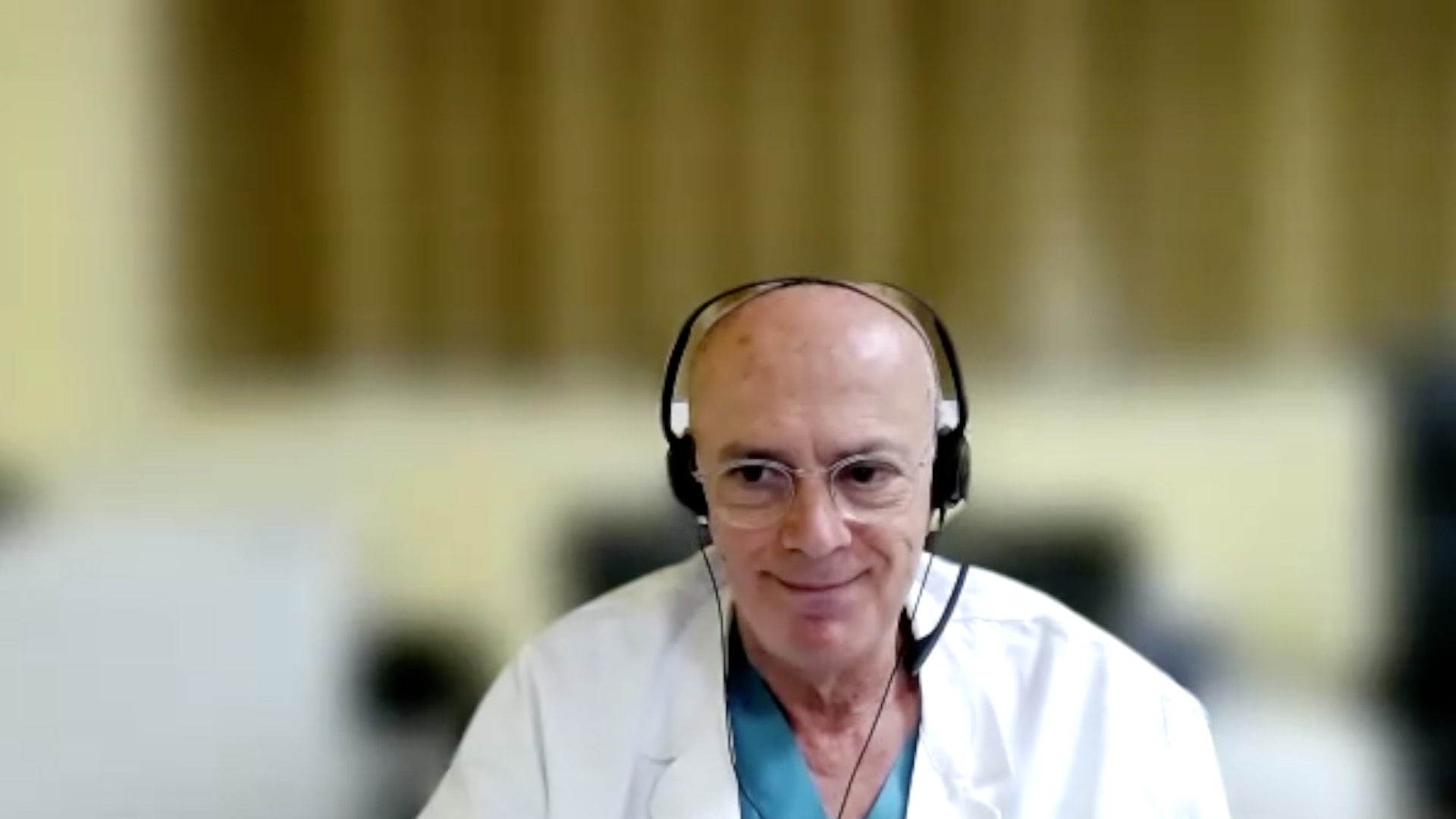
 “As retinal therapies become increasingly sophisticated, robotic platforms may help translate these innovations into safer and more reproducible clinical practice.”
Robotic assistance is emerging as one of the most promising frontiers in vitreoretinal surgery, where procedures often require micron-level precision beyond the natural limits of human dexterity. As retinal therapies become more advanced, from subretinal gene delivery to vascular cannulation, robotic platforms may help improve stability, precision and reproducibility in some of the most delicate surgical tasks.
We spoke with Dr Hashem Abu Serhan (Department of Ophthalmology at Hamad Medical Corporation in Doha, Qatar) about where robotic vitreoretinal surgery is already showing clinical promise, which applications remain experimental, and what will be needed before these technologies become part of everyday retina practice.
Why is vitreoretinal surgery such a compelling area for robotic assistance?
Vitreoretinal surgery is one of the most technically demanding fields in ophthalmology. Many retinal structures are measured in microns, and surgeons often work at the limits of human dexterity. Physiological hand tremor, fatigue, and restricted instrument precision can become significant challenges when manipulating delicate retinal tissues.
Robotic assistance offers the potential to enhance surgical precision, improve stability, and enable movements that exceed natural human capabilities. This is particularly important for procedures requiring micron-level accuracy, such as membrane peeling, subretinal injections, retinal vein cannulation, and gene or cell therapy delivery. As retinal therapies become increasingly sophisticated, robotic platforms may help translate these innovations into safer and more reproducible clinical practice.
Which procedures have the strongest evidence so far, and what remains experimental?
The strongest clinical evidence currently exists for robot-assisted retinal membrane peeling and retinal vascular cannulation. Early human studies have demonstrated that robotic systems can safely perform these tasks while improving precision and reducing unintended instrument movement.1
Subretinal drug and gene therapy delivery is another area with growing evidence and significant interest, particularly because accurate localization and controlled injection are critical for therapeutic success.
However, many applications remain experimental. These include autonomous surgical maneuvers, AI-guided procedures, robotic retinal laser delivery, fully robotic vitreoretinal surgery, and advanced telesurgery.2 While proof-of-concept studies are encouraging, larger clinical trials are still needed before widespread adoption.
Where is robotic assistance most likely to add clinical value: routine macular surgery, subretinal delivery, retinal vascular procedures, or other high-precision tasks?
The greatest value is likely to be seen in procedures that push beyond normal human physiological limitations.
Subretinal delivery is perhaps one of the most promising applications because successful gene and cell therapies require highly controlled injections into a precise anatomical space. Even minor inaccuracies can affect treatment outcomes.
Retinal vascular procedures, such as vein cannulation and targeted drug delivery, are also excellent candidates because these vessels are often smaller than the amplitude of natural hand tremor.
Routine macular surgery may benefit from robotic stabilization and enhanced precision, but the clinical advantage may be less dramatic because experienced vitreoretinal surgeons already achieve excellent outcomes. Therefore, the greatest impact is likely to occur in emerging therapies and ultra-high-precision interventions rather than standard procedures.
What are the main barriers to adoption in everyday retina practice, and what training infrastructure will be needed?
Several challenges should be addressed before robotic vitreoretinal surgery becomes mainstream.
First, cost remains a major obstacle. Robotic systems are expensive to purchase, maintain, and integrate into operating rooms. Second, procedure times may initially be longer during the learning phase. Third, robust evidence demonstrating superior patient outcomes and cost-effectiveness is still limited.
Training will also be crucial. Future retinal surgeons may require structured curricula that combine traditional microsurgical skills with robotic simulation, virtual reality training, and competency-based certification. Fellowship programs will likely incorporate robotic modules, and dedicated surgical simulators will play a key role in shortening learning curves while maintaining patient safety.
Ultimately, widespread adoption will depend on demonstrating that robotic systems not only improve precision but also produce meaningful clinical benefits that justify their cost and complexity.
Closing Perspective
Robotic-assisted vitreoretinal surgery is not intended to replace surgeons. Rather, it represents a technology that can augment human performance, extending surgical capabilities beyond natural physiological limits. As gene therapy, regenerative medicine, and precision retinal interventions continue to evolve, robotics may become an essential platform enabling the next generation of retinal treatments.
References
- Thirunavukarasu AJ, Hu ML, Foster WP, Xue K, Cehajic-Kapetanovic J, MacLaren RE. Robot-assisted eye surgery: a systematic review of effectiveness, safety, and practicality in clinical settings. Transl Vis Sci Technol. 2024;13(6):20. doi:10.1167/tvst.13.6.20
- Ahronovich EZ, Simaan N, Joos KM. A review of robotic and OCT-aided systems for vitreoretinal surgery. Adv Ther. 2021;38:2114–2129. doi:10.1007/s12325-021-01692-z
Cite: Robotic-assisted vitreoretinal surgery for future retinal care. touchOPHTHALMOLOGY. 16 June 2026.
Editor: Nicola Cartridge, Director of Content
Acknowledgement: Dr Abu Serhan has nothing to disclose in relation to this article. No fees or funding were associated with its publication.