Long-term trial data and real-world registry trends highlight the expanding role of injection-based treatment, while reinforcing the continued importance of laser in individualized ROP care
 Two ARVO 2026 abstracts highlight the continuing shift in retinopathy of prematurity (ROP) care, with longer-term trial data supporting the durability of intravitreal aflibercept and real-world registry data showing increasing national adoption of anti-VEGF therapy. Together, the findings suggest that anti-VEGF therapy is becoming an increasingly important part of ROP management, while reinforcing the need for structured follow-up and continued training in both injection-based and laser approaches.
Don’t miss out on hearing about our latest peer reviewed articles, expert opinions, conference news, podcasts and more.
Aflibercept maintains 5-year efficacy and safety in ROP
Five-year data from the FIREFLEYE next study provide longer-term reassurance on intravitreal aflibercept 0.4 mg for severe acute-phase retinopathy of prematurity (ROP), a sight-threatening disease affecting very premature and low-birthweight infants. The study followed 100 children from the randomized FIREFLEYE trial, including 66 treated with aflibercept and 34 treated with laser.
At 5 years, visual outcomes were numerically favorable with aflibercept. The estimated probability of better binocular best corrected visual acuity with aflibercept versus laser was 62.4%, and 92.0% of children treated with aflibercept achieved binocular vision of at least 20/40 compared with 75.0% after laser. Disease control was sustained in both groups, with no active ROP reported in all aflibercept-treated children and 96.7% of laser-treated children, while unfavorable structural outcomes were uncommon.
Aflibercept was also associated with lower rates of high myopia, reported in 8.6% of eyes versus 25.9% with laser. No clinically relevant differences in neurodevelopmental or growth outcomes were identified, and adverse events were consistent with those expected in this fragile preterm population. Overall, the results support the durable efficacy and tolerability of aflibercept through age 5 years, while reinforcing the need for continued follow-up.
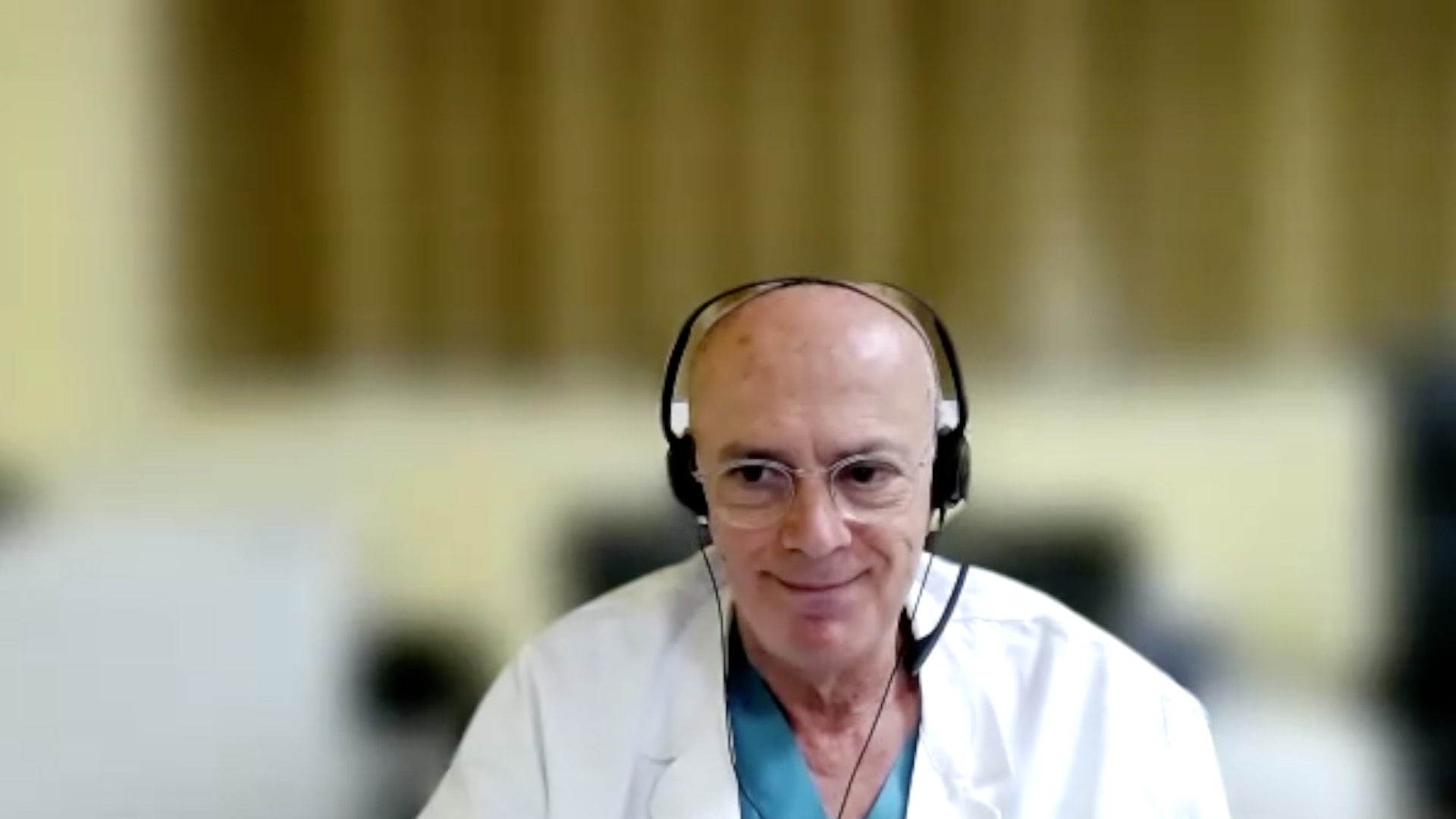
 We asked presenting author Dr Domenico Lepore about the 5-year FIREFLEYE next data and what the findings may mean for the long-term management of children treated for severe acute-phase retinopathy of prematurity.
Given the significant reduction in high myopia and better visual acuity at five years, should aflibercept now be considered the preferred primary treatment for severe acute-phase ROP?
I think these data represent quite a milestone in the treatment of ROP. From my perspective as Secretary of the World ROP Council, which looks at the different aspects of ROP worldwide, one of the important points is that we are not dealing with just one form of ROP.
In countries where we commonly manage micro-preterm infants, we are often treating babies born before 25 weeks’ gestational age, sometimes weighing 500 g or less, who may develop very aggressive ROP in the first days or weeks of life. In other settings, we also see a different pattern of ROP in larger babies, often around 1–1.5 kg and born at later gestational ages, for example 28 or 29 weeks, where oxygen administration may not have been as precisely controlled. These two forms of ROP can look different clinically, but the FIREFLEYE data show that aflibercept 0.4 mg can be used effectively in both situations.
One of the key findings is the reduction in reactivation. When anti-VEGF treatment was first introduced in ROP, one of the major concerns was that these children might need to be followed indefinitely because of the risk of late reactivation. Careful follow-up remains essential, but our study suggests that after 50 weeks, reactivation is no longer seen. This means clinicians need to be very strict with follow-up during that early period, but after 50 weeks they may be able to relax the intensity of monitoring, seeing children monthly or every three months depending on the individual child’s condition.
Of course, these findings come from the controlled setting of a randomized clinical trial, which is in many ways the “perfect world.” We now need more real-world data from centers using aflibercept in clinical practice, and we are encouraging colleagues to publish their experience. However, based on these results, we expect that similar outcomes may be achievable outside the trial setting.
For me, the most important point is that we had no blind children in this study, which is a fantastic outcome. Combined with the lower rates of high myopia, better visual acuity and a follow-up burden that appears less demanding than initially feared from earlier anti-VEGF studies such as RAINBOW and BUTTERFLEYE, these data are game-changing. In that sense, aflibercept 0.4 mg should now be considered a very strong primary treatment option for severe acute-phase ROP.
How do these long-term efficacy and safety findings change your approach to counseling parents regarding the lifelong refractive and neurodevelopmental outcomes of aflibercept versus traditional laser therapy?
The 5-year data are very important for how we counsel parents, particularly because they address one of the main concerns around anti-VEGF treatment in ROP: long-term neurodevelopmental safety. This was also seen in the RAINBOW study, but the FIREFLEYE next results provide further reassurance that there were no meaningful differences in neurodevelopmental outcomes between children treated with anti-VEGF therapy and those treated with laser.
It is important to explain to parents that these are very premature and medically fragile babies, so their developmental outcomes may not be the same as those of children born at term. However, the key point is that the study did not show a difference between the aflibercept and laser groups. This supports the use of anti-VEGF treatment when the screening team considers it the right option for that child.
When speaking with parents, I would therefore explain that the treatment appears safe, but that treatment is only one part of the pathway. Their baby must remain in a structured screening and follow-up program. This is essential not only to monitor for ROP activity or reactivation, but also to support visual development more broadly.
Parents also need to understand that ROP is not the only cause of visual impairment in premature infants. Cerebral visual impairment is very common in preterm babies, particularly those with brain injury, and it can be a major contributor to long-term visual difficulties. Early identification and rehabilitation are therefore extremely important, because the central nervous system may have greater potential for rehabilitation than the retina.
So, my message to parents is that both laser and anti-VEGF treatment can be used safely within the right clinical context, but long-term follow-up is mandatory. The choice of treatment does not remove the need for careful monitoring, early rehabilitation where needed, and a structured long-term approach to visual development.
IRIS Registry analysis shows decade-long shift toward anti-VEGF treatment in retinopathy of prematurity
Retinopathy of prematurity treatment has evolved substantially over the past decade, with intravitreal anti-VEGF therapy increasingly used alongside or instead of laser photocoagulation. Using real-world data from the American Academy of Ophthalmology IRIS® Registry, this study evaluated national treatment patterns in infants treated for retinopathy of prematurity between 2014 and 2024.
Among 3,438 infants treated for retinopathy of prematurity, 1,988 (57.8%) received laser monotherapy, 735 (21.4%) received injection monotherapy, and 715 (20.8%) received combination therapy. Laser remained the most common treatment overall, but its use declined over time. In 2014, laser monotherapy accounted for 78% of treatments, while injection monotherapy and combination therapy together accounted for 22%. By 2023, injection-based approaches represented nearly half of all interventions, and by 2024, laser monotherapy had declined to 49.9%. Bevacizumab was the most commonly used anti-VEGF agent in both the injection-only group and the injection followed by laser group.
These findings show a clear national shift toward greater use of intravitreal anti-VEGF therapy for retinopathy of prematurity. The trend likely reflects evolving evidence, growing clinician familiarity with anti-VEGF injections, and the practical advantages of shorter procedures in medically fragile premature infants, particularly those with more posterior disease or limited tolerance for prolonged laser treatment under anesthesia.
To explore what these changing treatment patterns mean for clinical practice, we asked Dr Francisco Altamirano Lamarque about the key factors driving the shift toward anti-VEGF therapy in retinopathy of prematurity and how training should evolve as traditional laser photocoagulation becomes less dominant.
What do you consider the primary driver behind the dramatic decade-long shift from laser monotherapy to anti-VEGF treatments for ROP in the IRIS Registry?
The observed shift from laser photocoagulation to anti-VEGF therapy in ROP likely reflects a convergence of evolving clinical evidence, practical advantages, and changing neonatal demographics. Pivotal clinical trials and growing post-approval experience have supported the efficacy of anti-VEGF agents, increasing clinician familiarity and confidence in their use. Additionally, the minimally invasive nature of intravitreal injection makes it an attractive option in this setting. Anti-VEGF injections can be performed at the NICU bedside within minutes, whereas laser photocoagulation often requires longer procedures under sedation or general anesthesia and may be technically challenging in neonates requiring respiratory support such as CPAP. These logistical advantages have likely contributed to broader adoption. Finally, improved survival of extremely premature infants (<27 weeks gestational age or <800 grams), who are at higher risk for posterior and aggressive ROP, has further driven this shift, as these patients may be less tolerant of prolonged procedures due to high prevalence of systemic comorbidity and more amenable to injection-based therapy.
How should these findings influence the training of the next generation of pediatric ophthalmologists, given the significant decline in traditional laser photocoagulation procedures?
Despite the increasing use of anti-VEGF therapy, laser photocoagulation remains an essential skill for pediatric ophthalmologists. In the IRIS Registry, around 50% of patients still received laser. Proficiency in laser is particularly important given the need for long-term follow-up after anti-VEGF treatment, as persistent peripheral avascular retina may lead to late reactivation or complications such as retinal detachment. Additionally, concerns regarding follow-up adherence may favor laser in certain populations, particularly in referred or socioeconomically vulnerable infants where reliable longitudinal monitoring is uncertain. Laser may also be preferred in specific clinical scenarios, such as infants presenting with type 1 ROP after 40 weeks PMA, where enhanced fibrotic proliferation has been observed. While both anti-VEGF and laser can induce regression, anti-VEGF may be associated with unresolved avascular retina and fibrotic contraction in these cases (PMID: 30808338). Overall, these trends suggest that laser is not being replaced, but rather still utilized, and maintaining proficiency remains essential for comprehensive ROP care.
Key take-away
Together, these data point to a meaningful evolution in ROP treatment, with anti-VEGF therapy emerging as an increasingly important option supported by both long-term clinical trial outcomes and real-world uptake. However, the continued use of laser in around half of treated infants highlights that both approaches remain important, with treatment decisions guided by disease characteristics, patient fragility, follow-up considerations and clinician expertise.
Cite: ARVO 2026: Anti-VEGF therapy shifts the ROP treatment landscape. touchOPHTHALMOLOGY. 16 June 2026.
Editor: Nicola Cartridge, Director of Content
Acknowledgment: This content has been developed independently by Touch Medical Media for touchOPHTHALMOLOGY. It is not affiliated with ARVO. Views expressed are the speaker’s own and do not necessarily reflect the views of Touch Medical Media. No funding was received in the publication of this short article. This article was created by the touchOPHTHALMOLOGY team utilizing AI as an editorial tool (ChatGPT (GPT-5.4) [Large language model]. https://chat.openai.com/chat.) The content was developed and edited by human editors. No funding was received in the publication of this article. Thank you to the presenting authors for sharing their perspectives.